 DE
DE
Mistakes get taken on unnoticed
A system that accepts every input without question also picks up errors, individual opinions and statements that no longer hold. You notice only when an answer goes wrong.
Knowledge that learns
Your team knows when an answer is wrong, incomplete or out of date. souveraen.ai turns that into shared knowledge – but only once the person responsible for the subject has checked it and given approval.
 Approval before anything changes
 Every entry has a source
 Reversible at any time
 No training on your data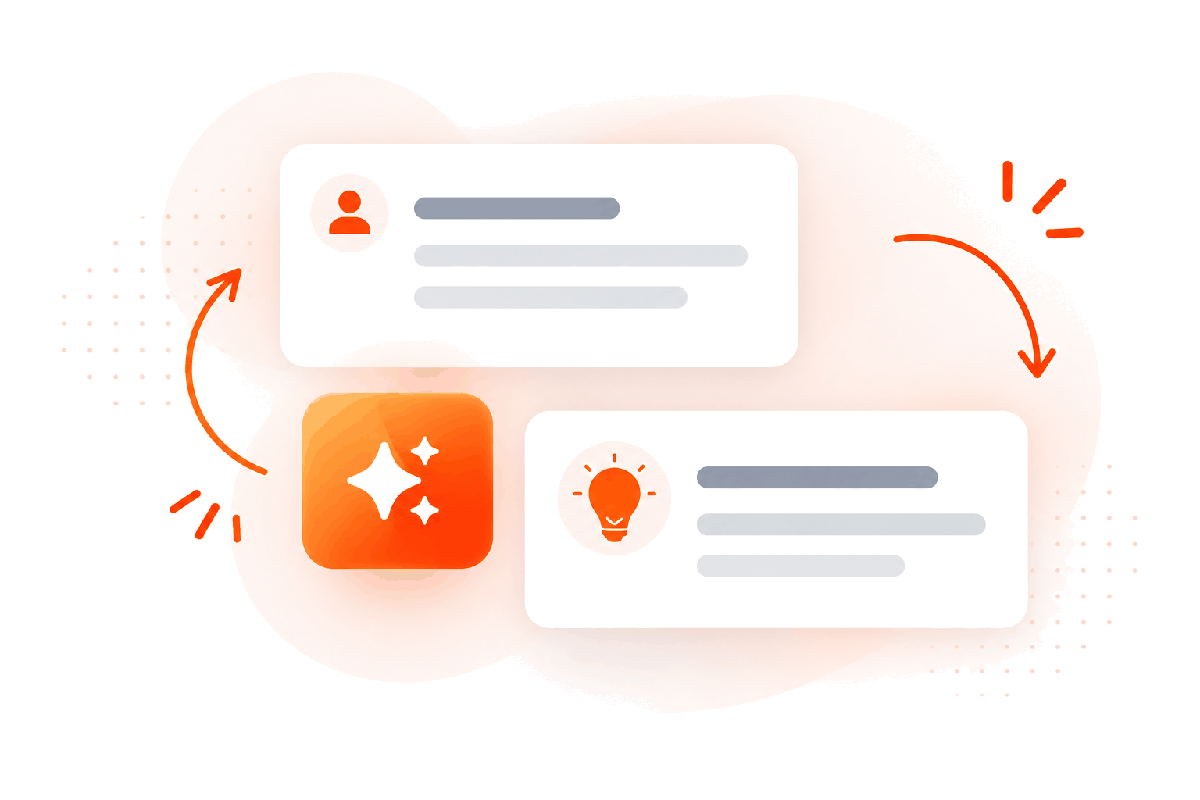
The approval cycle
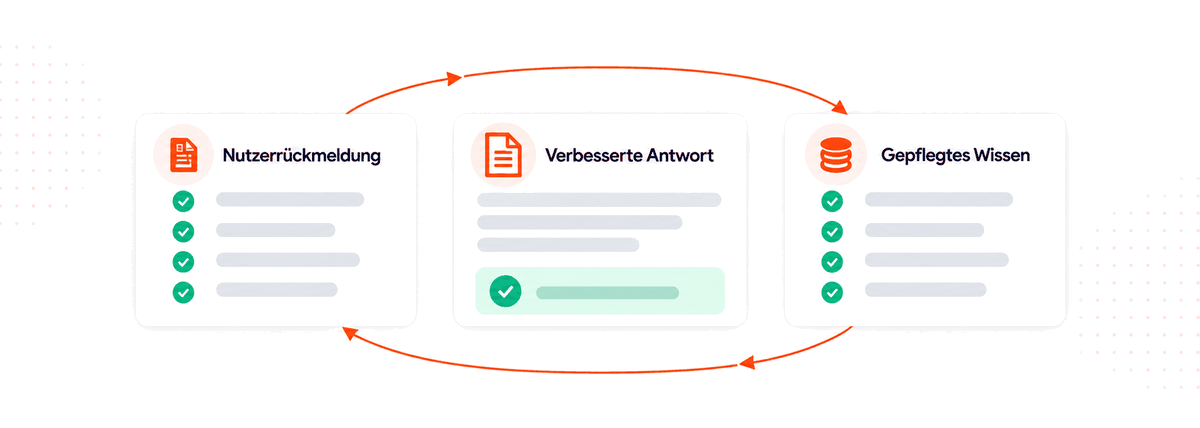
Every improvement takes the same path. Between the feedback and its effect there is always a decision by a person, never an automatic step.
Someone on the team reports an answer as wrong, incomplete or out of date and suggests a correction.
The person responsible for the subject checks the suggestion against the sources. Nothing is taken over unchecked.
Only the recorded approval turns a suggestion into knowledge that applies. The source and the time it happened are carried with it.

The approved correction is stored together with where it came from and stays traceable on its own.

The correction improves future answers in the relevant workspace and can be withdrawn at any time.
Why unchecked learning is risky
Not every piece of feedback is right. Many AI systems either never learn at all or learn from every input without control. Either way it costs you trust in the end.
A system that accepts every input without question also picks up errors, individual opinions and statements that no longer hold. You notice only when an answer goes wrong.

Feedback sometimes contains confidential or personal content. Without a check, things end up in shared knowledge that do not belong there.
If it is unclear where a learned statement came from and who approved it, nobody can stand behind the answer. For an enterprise AI that is untenable.
What the cycle looks like
The feedback, the checked correction and the knowledge it feeds stay connected. You can see at any point what a learned statement rests on.
 Facts from your documents are stored with the wording quoted and the source named.Open contradictions go on the review list instead of being overwritten quietly.Every approval is logged with the person, the time and the source.Entries about a person or from a document can be removed completely.No unchecked feedback reaches shared knowledge on its own.No model weights are retrained on your documents, questions or feedback.No feedback and no correction leaves your appliance.No approval takes effect beyond its tenant and workspace.
What is learned keeps its source
Learned knowledge is not a hunch running in the background. Every entry keeps its origin, and conflicts are made visible before anyone decides them.
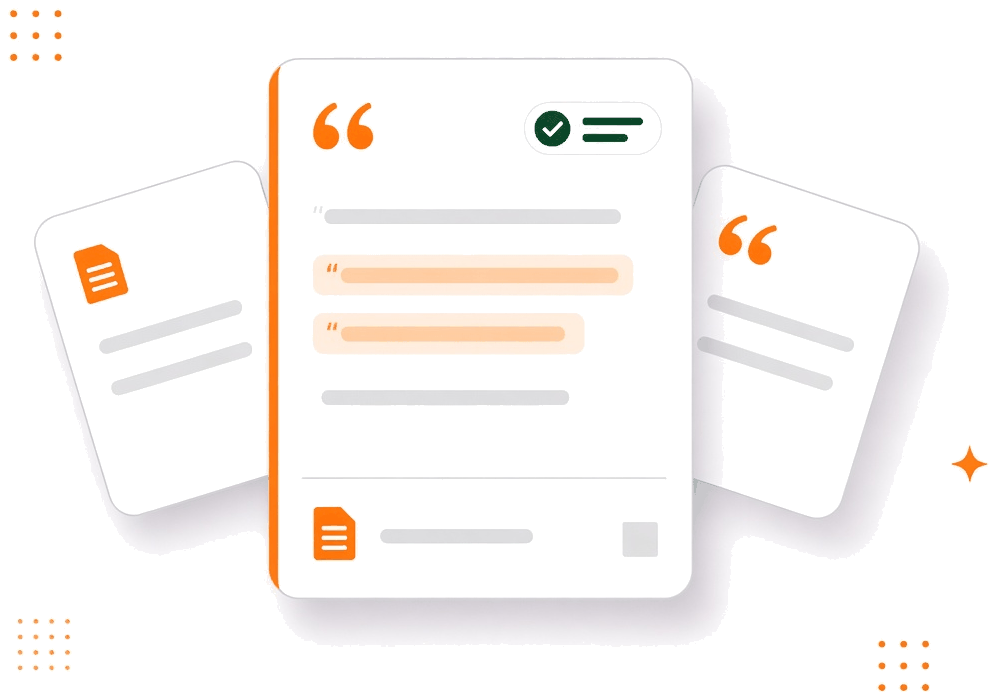
Facts drawn from your documents are stored with the wording quoted and the source named. What cannot be sourced is not carried as knowledge.

Where two sources say opposite things, an open contradiction appears on the review list. The person responsible for the subject decides, and the decision is logged.
What has been learned applies in the tenant and workspace where it was approved. The permissions on the sources are checked again on every access.
What the cycle gives you
A single correction becomes knowledge that helps the whole team, bounded by the permissions that already apply in your company. Available from 1 October 2026.
Corrections from the team improve future answers in the relevant workspace. Each one stays reversible and can be read back in the history.

For recurring questions, the approved answer applies together with its sources. Nobody writes it again from scratch.
 Checked answer
Your company's abbreviations and specialist terms become binding for search as soon as they are approved.

Approved corrections move the right sources to the front. The effect is measurable in the report.
 +42 % more relevant hits
Common questions
No. There is no quiet fine-tuning on your content. The platform learns at the level of checked knowledge: sourced facts, approved corrections and glossary entries. The model weights stay as they are.
It is withdrawn. The previous state applies again, and the history shows who approved what and when, and who took it back.
People responsible for the subject, named by your company itself. An approval is a logged decision taken by a role, not an automatic step and not a majority vote.
Only if they were approved in the same workspace. Learned knowledge follows the same boundaries as your documents: per tenant and workspace, with permissions checked on every access.
Every entry carries its source with the wording quoted. If the source is no longer visible or has been deleted, the entry is no longer used.
Ready for learning you can check?
Tell us where knowledge gets lost today in one-to-one chats and mailboxes. We will show you how it becomes checked knowledge for the whole team.