 DE
DE
Answering knowledge questions
Precise answers from your sources — with a citation.
See an exampleAgents and workflows
Agents take on recurring work across your knowledge. They stay visible step by step and put sources into the result — with the permissions you already have.
 Your permissions, your rules
 Workflows you can watch
 Results with their sources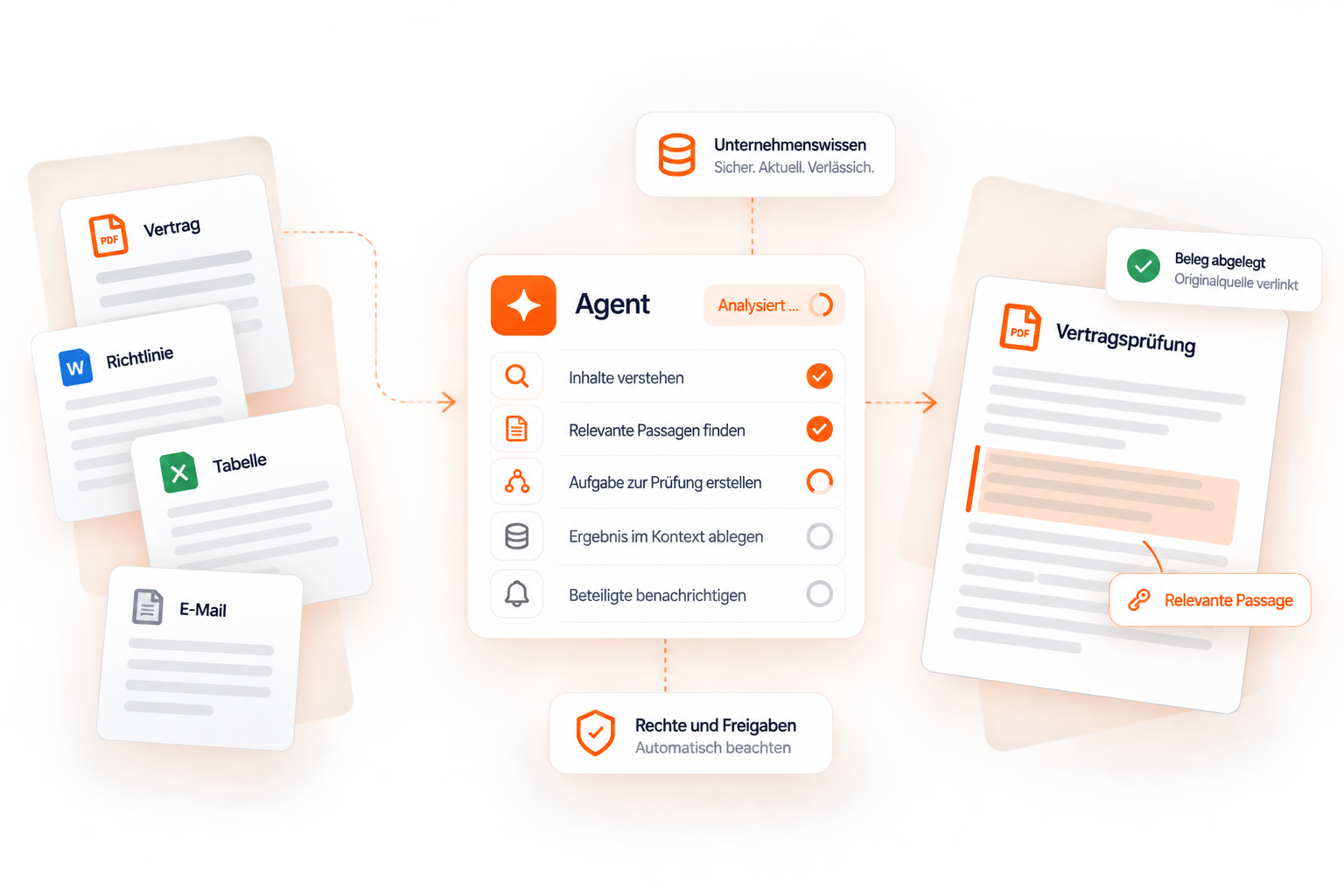
Tasks agents take on
Whether contracts, policies or mail — your agents take on the recurring work reliably, with a source, and inside the permissions you already have.
Precise answers from your sources — with a citation.
See an example
Structure information from several documents.
See an example
Workflows on a schedule — completeness and inventory checks included.
See an example
Pull together where a case stands, so cover can carry on.
See an example
Spot changes and report them in time.
See an example
Set up recurring workflows from vetted building blocks.
See an exampleHow your agents work
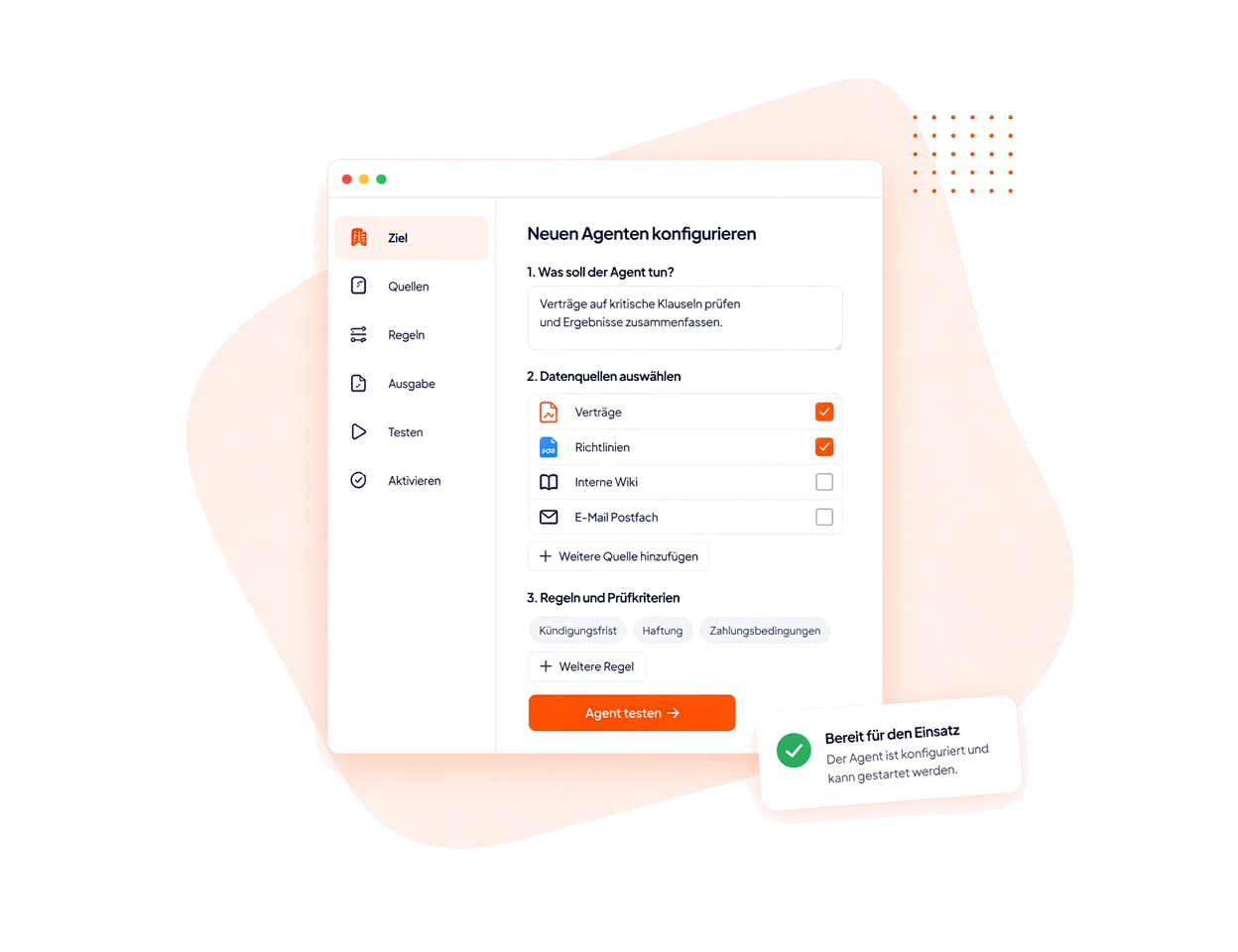
From the idea to a running agent — configured simply, visible in the workflow, fully checkable.

You describe the task and choose the relevant sources (for example contracts, policies, mailboxes).

You set the rules, the checks and the output format — with no programming at all.

The agent works through a sample. You review the result and adjust it if you need to.

The agent takes on the task automatically — on a schedule, or when new documents arrive.
An agent is not a master key
Agents work with existing permissions, keep every step on record and leave sources visible. What applies to your people applies to every agent.
An agent sees only what the person who asked for it may see. There is no account of its own that reaches further.

Actions, decisions and linked sources stay visible — even months later.

You decide what an agent may do and what it may not. Reading and reporting change nothing in your systems.
Runs can be inspected, adjusted, paused or stopped. Anything that writes waits for your approval.
Common questions
No. Every run takes on the existing permissions of the person who asked for it. Anything not released to you appears in no step and no result.
A result carries its sources. You check it against the original, not on trust. If something is off, you see the passage and can stop the run.
The plan, the steps, the sources and the result of every run are logged and can still be followed months later.
Anyone who may see the run and the log under your permissions. The plan is open before the work starts, and every step carries its sources.
Yes. Runs can be inspected, adjusted, paused or stopped. Actions that reach into a system wait for your personal approval anyway.
Agents reach tools through vetted MCP servers. Tools that read work without asking; tools that act need your approval first.
Agents and workflows
Think of a task that comes up every week in your team. In the trial you see how an agent plans it, which sources it brings back and at which point it needs your approval.