 DE
DE
One tool, one schema
Because what a tool expects and returns is written down, the agent cannot call it however it sees fit.
MCP ecosystem
Over the Model Context Protocol, souveraen.ai reaches the systems your teams work in: the ticket system, the wiki, the CRM, the database. Every tool comes from the reviewed Marketplace and only goes live once you approve it.
 A reviewed Marketplace
 No change without approval
 Every call logged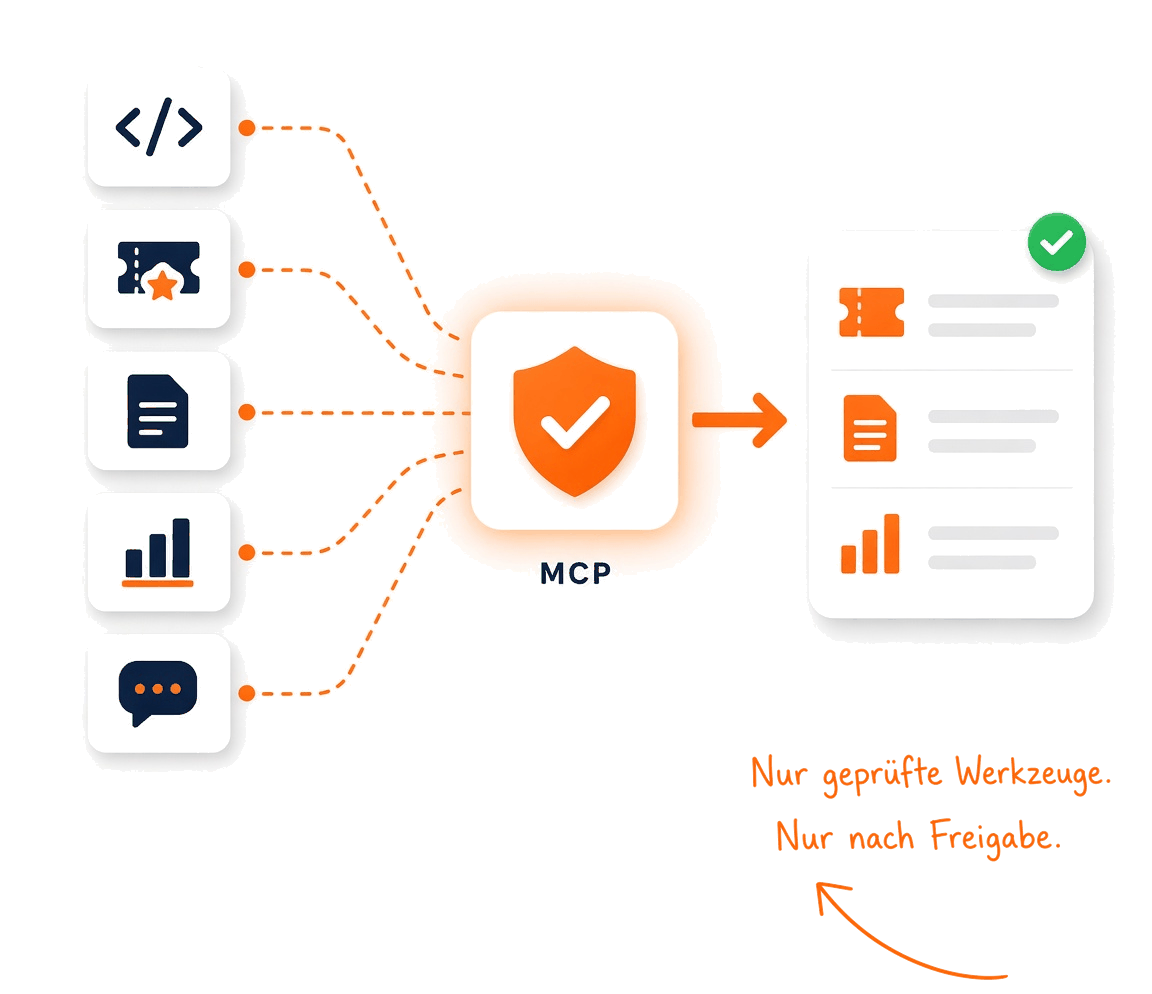
How it goes
Your IT team does the first three once. Your team lives the fourth one every day.
Your IT team searches the Marketplace for the tool a team needs, the ticket system or the wiki, say.
You see the schema, the risk class and the permissions the tool asks for, and you narrow the scope to one tenant and one workspace.
Nothing connects until you approve it. Without your approval the server stays in the catalogue and never runs.
The team works with the tool, every call appears in the log, and every change leaves a record in the approval inbox.
What MCP is in souveraen.ai
A tool is registered as an MCP server, and in doing so it states which calls it accepts, how risky they are and which workspace it belongs to.
Because what a tool expects and returns is written down, the agent cannot call it however it sees fit.

A tool is given its risk class when it is registered. Reading calls and calls that make changes then follow different rules.

A connection holds for one tenant and one workspace. It is not a general door into another system.
Every call is logged and every change produces a record. Withdrawing an approval takes effect at once, not at the next restart.
One way in, not many endpoints
Every approved server runs through one internal broker. The platform opens no arbitrary endpoints to the outside, names are qualified uniquely per server, and a single tool can be switched off without exposing the rest of the same connection.
Unambiguous tool namesSwitchable one by oneWithdrawal takes effect at once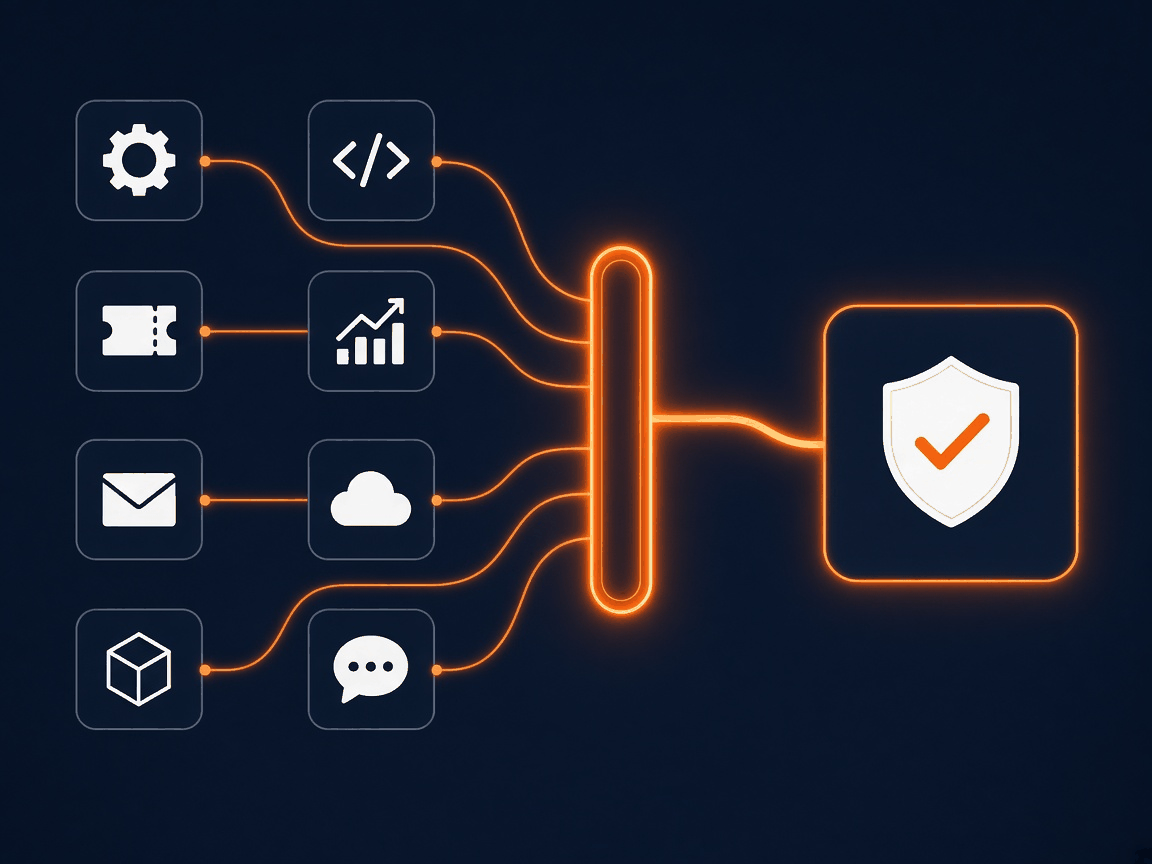
Reading and changing
So we treat the two differently: a tool that only reads need not ask. The moment one changes something in your own system, you decide first.
| Aspect | Reading tools | Tools that make changes |
|---|---|---|
| What happens | The tool fetches information and reports back. | The tool changes something in your own system. |
| Before the call | The connection is already bound before the agent plans. | You see the change it intends to make as a preview. |
| Approval | Granted with the approval of the connection. | Also required for each individual case. |
| Afterwards | The call appears in the log, with the passages it used. | A record lands in the approval inbox. |
The sourced search across your company knowledge is itself connected as an MCP tool. Approved third-party applications can use it, and the passages come with it.
The MCP Marketplace
Many vendors support the protocol. Which servers run at your site is settled by the admission review and by your own approval in your tenant.


Examples from the MCP ecosystem, with the product marks of the respective vendors. They are not partnerships, certifications or confirmed compatibilities, and say nothing about an integration being in place. Availability, permissions and approval are checked per server in your tenant.
Admission review
A public directory lists whoever has registered. For the Marketplace we review every server ourselves and write down the result.
Every server is reviewed before admission; origin, version, digest and transport are recorded.For local operation, servers are qualified on arm64, mirrored and pinned to a fixed digest.The reviewed servers sit in the signed offline package of the appliance. No server is fetched at runtime.Outbound traffic is denied by default for every server; only what the tool genuinely needs is allowed.Credentials live in the approved credential store, not in the tool definition.Different per operating model
No external broker service is involved without the explicit approval of your tenant.
| Operating model | Where the servers come from | What that means for you |
|---|---|---|
| Private Spark | Reviewed, mirrored and pinned servers from the offline package. | No internet connection needed. |
| Air-Gap Enterprise | The same servers, delivered in the signed offline package. | Completely sealed off. |
| European On Demand | A hosted broker service in addition, optional. | Only after a review of data residency, data processing, sub-processors, credential custody and deletion. |
Common questions
Not unreviewed. We admit servers after a documented review, mirror them and pin them to a fixed digest. An entry in a public directory is not a sufficient basis for trust.
No. For Private Spark the reviewed servers sit in the signed offline package. Fetching anything at runtime is ruled out.
No. Reading tools fetch information and report back. Tools that make changes are tied to an approval: you see the change it intends to make beforehand and get a record afterwards.
No. The Marketplace shows reviewed servers. One of them goes live only after an approval in your tenant, which only the roles you designate for it can grant.
An integration reads a file store into your knowledge base. An MCP tool carries out a single call in one of your systems. The two are kept apart.
Yes. souveraen.ai offers its sourced search as an MCP tool, so approved third-party applications can use it. Access holds for one tenant and one workspace, and brings its passages with it.
MCP ecosystem
Send us the list of systems your team uses every day. We will check which of them are already in the Marketplace and what permissions they would run with in your tenant.