Running AI agents in a sandbox without secrets
The Eclipse Foundation has released Enclave 1.0, an open source runtime that runs coding agents such as Claude Code or Codex in containers. Companies that let agents work on code need to know what this isolation covers and what it leaves open.

What Eclipse Enclave 1.0 is
The Eclipse Foundation has published Eclipse Enclave 1.0, a runtime in which coding agents such as Claude Code, Codex or OpenCode work inside containers. EclipseSource, a member organisation of the foundation, developed it and handed it over to the foundation. The software is released under the MIT licence.
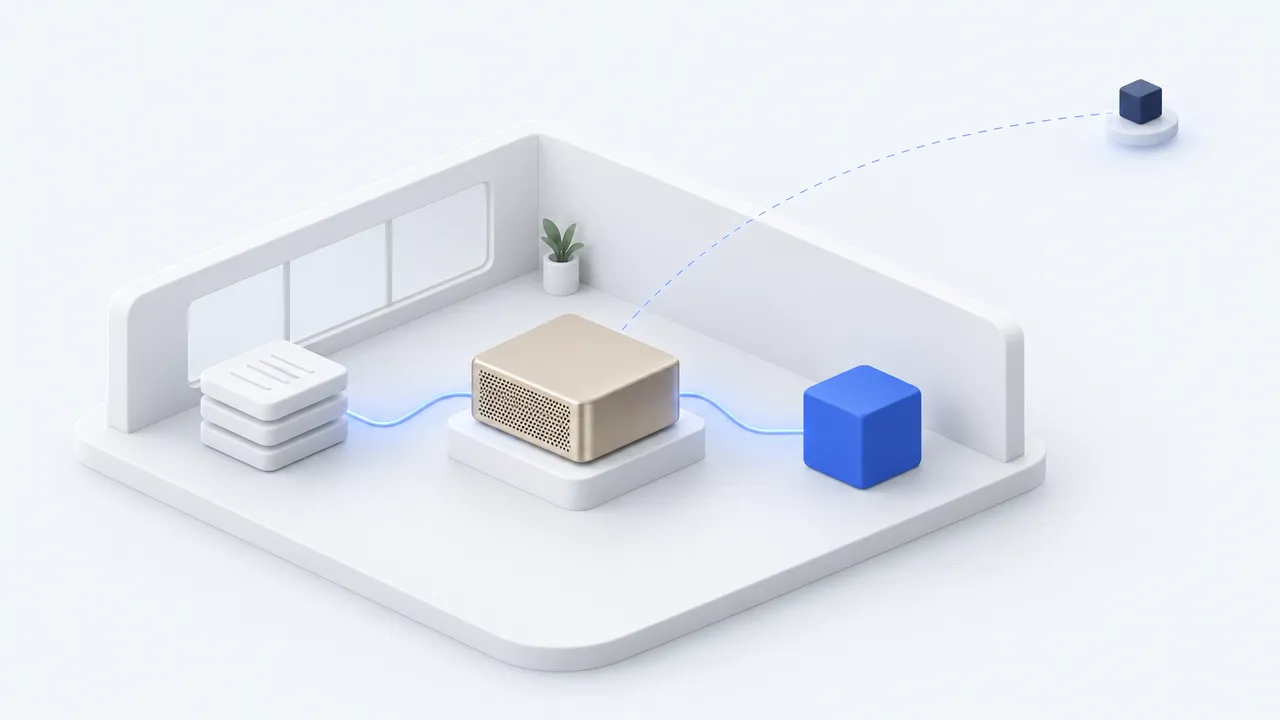
Each session gets its own container based on Docker or Podman. The agent initially sees only the project directory and any folders the user has released explicitly. The home directory and the SSH agent are not mounted by default.
Outgoing traffic passes through a gateway that lets through only domains on an allowlist and logs its decisions. Connectors exist for Claude Code, Codex, Copilot, OpenCode, Pi and the Theia IDE, and further agents can be added as extensions. Docker follows a similar idea with its Sandboxes, where each agent runs in its own microVM, according to heise online.
How Enclave hides secrets from the agent
API keys and some tokens, such as the CLAUDE_CODE_OAUTH_TOKEN created with claude setup-token, reach the agent only as placeholders. The gateway inserts the real value, and only in HTTPS requests to hosts that have been approved for that purpose. An agent that reads its environment therefore finds a placeholder and no usable key.
The documentation names a limit. Logins stored as files or renewed automatically are not protected. This includes the OAuth login that many agents ask for on first start, which Enclave stores on the host and then mounts into the container.
Where the isolation ends
The project directory is mounted writable by default, so an agent can change files directly on the host. It can also create Git hooks, which then run on later Git commands outside the container. Mounting the project with the option --project-mount readonly prevents this.
The developers state that the sandbox restricts access to host and network but does not form a fully hardened boundary against container escapes. The allowlist defines which destinations the agent can reach, and says nothing about what it sends there. Enclave needs Docker in rootful mode or Podman and runs on Linux, macOS and WSL2. The binaries and packages for Ubuntu and Fedora on GitHub come without a signature.
Enclave does not address this by itself, since an agent that reads manipulated content may still misuse what it is allowed to reach.
What companies should check now
A sandbox reduces exposure but does not replace a decision about what an agent may touch at all. These points are worth working through before agents run on developer machines or build servers:
- Check whether the agent logins stored on the host are acceptable, since Enclave does not shield file-based or auto-renewed logins.
- Decide whether projects should be mounted read-only and where write access is truly needed.
- Keep the allowlist short and review the gateway log, remembering that it shows destinations and not content.
- Look at the container runtime: Docker in rootful mode carries different risks than Podman, and the sandbox is no hardened boundary.
- Verify packages yourself, because the Ubuntu and Fedora packages are unsigned.
- Keep production credentials, customer data and anything covered by professional secrecy such as § 203 StGB out of reach of the agent altogether.
Your works council (Betriebsrat) may also need to be involved if logs of agent activity can be tied to individual staff. Questions on data protection fit with the topics on GDPR and AI at work and on security and hosting. Teams that prefer to keep models in their own network can read about local AI.
Write access only with human approval
The Git hook risk shows a general principle: an agent that can write can cause effects later and elsewhere. Anything that changes a system is better released by a person than granted permanently. This applies to code repositories as much as to document stores and ticket systems.
souveraen.ai applies this principle in its own agents with approval. Agents and automations prepare tasks, and anything that writes to a system waits for approval. Its connections to sources such as SharePoint or Jira are read-only and use the existing permissions. The platform is a knowledge tool and does not replace a sandbox for coding agents.
For coding agents the equivalent is a read-only mount, a reviewed diff and a merge by a named person. Such a rule is cheap to introduce and easy to explain to a works council or an auditor.